


Moneyline betting strips sports wagering down to its purest form. No point spreads, no totals, no complicated props. You’re simply picking which team wins the game. That fundamental simplicity makes moneylines the entry point for most new bettors, but the format’s straightforward nature masks genuine strategic depth that separates profitable bettors from recreational players.
The catch with moneylines is that not all victories pay equally. Backing a heavy favorite means risking substantial money for modest returns, while underdog bets offer lottery-ticket payouts that hit infrequently. Understanding when each approach makes sense, and more importantly, when the odds present actual value, transforms moneyline betting from coin-flip gambling into calculated decision-making.
Moneyline betting on brom bet.
The Mechanics of Moneyline Odds
American moneyline odds pivot around a $100 baseline, though you can obviously bet any amount. The positive or negative sign immediately tells you whether you’re looking at an underdog or favorite, and the number itself reveals the relationship between your risk and potential reward.
Favorites carry negative odds. The number represents how much you must wager to win $100 profit. At -150, you’re laying $150 to win $100. At -300, you’re risking $300 for that same $100 return. The larger the negative number, the heavier the favorite and the less profitable a successful bet becomes. Sportsbooks are essentially telling you that this outcome is likely, so they’re not paying premium prices for correct predictions.
Underdogs display positive odds. Here the number shows how much profit a $100 bet generates. At +150, your hundred dollars wins $150 profit for a total return of $250. At +300, that same stake returns $400 total. Underdogs are expected to lose, so the sportsbook offers enhanced payouts to attract action on the less probable side.
Even money appears as +100 or -100 depending on the book, representing a true toss-up where your risk equals your potential profit. These lines are rare in actual games since some team almost always has an edge, but they occasionally appear in evenly matched contests.
Calculating your actual payout requires understanding how these odds work mathematically. For favorites, divide 100 by the absolute value of the odds, then multiply by your stake. A $75 bet at -150 yields $50 profit: (100/150) × 75 = 50. For underdogs, divide the odds by 100 and multiply by your stake. That same $75 at +150 produces $112.50 profit: (150/100) × 75 = 112.50.
When to Bet Favorites
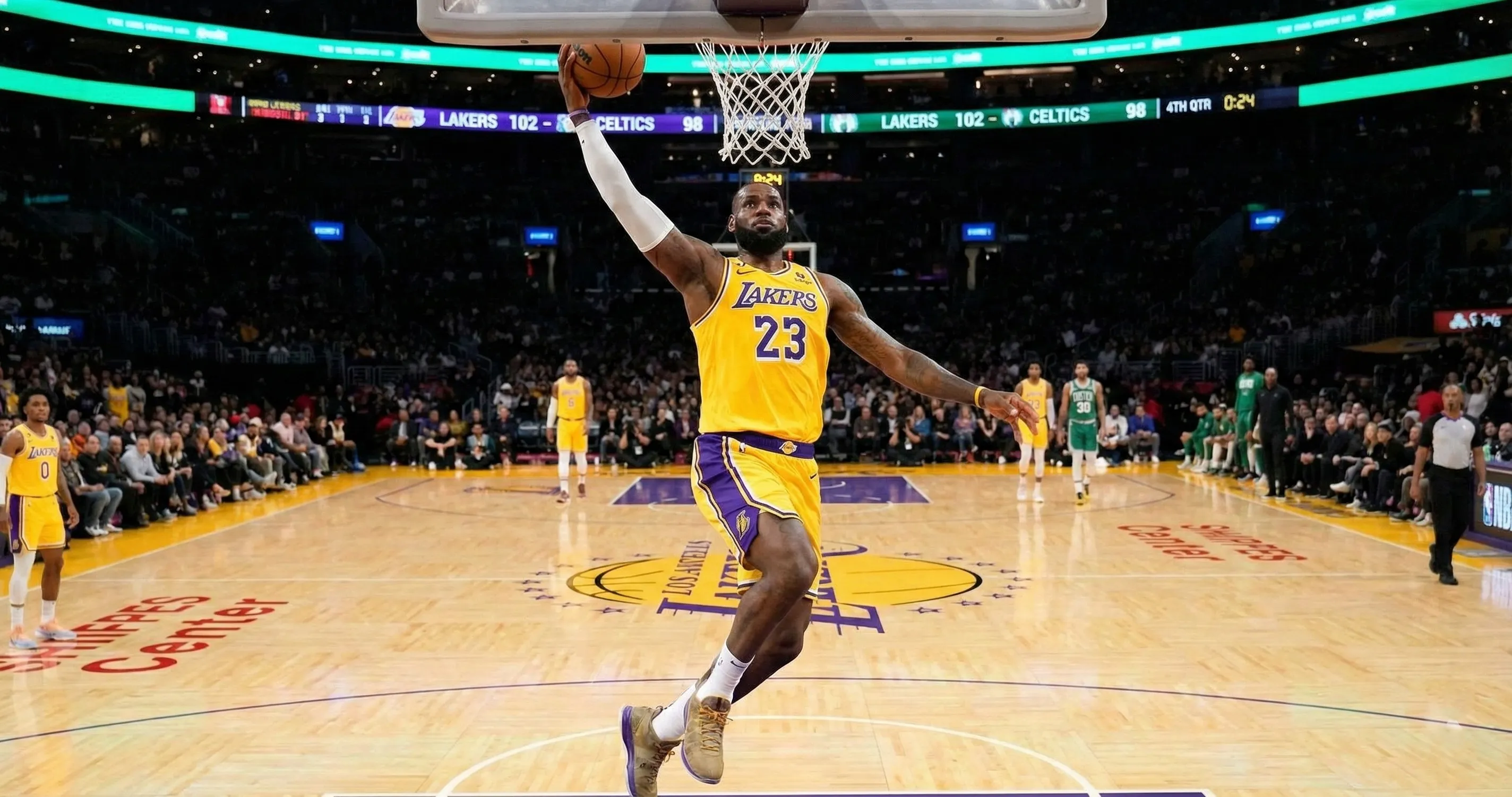
Betting favorites feels safe because you’re backing the team expected to win. The psychological comfort of siding with the better team attracts recreational bettors, which is precisely why favorites are often overpriced. Public money gravitates toward recognizable names and recent winners, inflating favorite prices beyond their true probability.
That said, favorites win for a reason. They have better players, better coaching, better matchups, or situational advantages. The question isn’t whether favorites win, which they obviously do more often than not, but whether they win frequently enough to justify their prices.
Consider a -200 favorite. The implied probability is 66.7%, meaning this team needs to win two out of every three games for bets on them to break even. If your analysis suggests they actually win 70% of the time, you’ve found a profitable situation. The 3.3% edge between actual probability and implied probability compounds over enough bets to produce positive returns. But if that favorite only wins 62% of the time, you’re losing money despite correctly picking winners more often than losers.
Heavy favorites in the -300 to -500 range present particular challenges. The implied probabilities run from 75% to 83%, leaving little margin for error. One upset in a handful of bets wipes out multiple winning wagers’ profits. Unless you’re extremely confident in your edge assessment, heavy favorites often represent poor value regardless of how likely they seem to win.
Medium favorites in the -130 to -180 range offer a sweeter spot for value hunting. The implied probabilities hover between 56% and 64%, which means upsets aren’t shocking and your handicapping edge can more easily overcome the built-in vig. These lines also tend to receive less sharp attention than heavy favorites or significant underdogs, sometimes leaving inefficiencies for astute bettors to exploit.
The Case for Underdogs
Underdog betting carries an unfair stigma. Recreational bettors avoid underdogs because backing expected losers feels counterintuitive. This psychological bias creates value on the underdog side that sharper bettors exploit season after season.
The mathematics favor underdogs more than most people realize. A +150 underdog only needs to win 40% of the time to break even. That leaves room for substantial profit if your analysis identifies underdogs winning at higher rates than their odds suggest. An underdog winning 45% of the time at +150 odds produces strong long-term returns despite losing more often than winning.
Certain situations systematically produce underdog value. Teams coming off bad losses often see their lines move too far against them due to recency bias. Divisional underdogs who know their opponents intimately tend to keep games closer than general power ratings suggest. Road underdogs getting more than a touchdown in the NFL cover at historically profitable rates because public perception frequently overvalues home-field advantage.
The emotional satisfaction of cashing a plus-money ticket also shouldn’t be dismissed. One +200 winner erases two losses and leaves profit remaining. This asymmetry means your strike rate can be substantially below 50% while still generating positive returns, assuming you’re selective about which underdogs you back.
Implied Probability and Finding Value
Every moneyline carries an implied probability, which is the sportsbook’s assessment of how likely that outcome is. Converting odds to probabilities is essential for identifying value bets, since the goal is finding situations where you believe the true probability exceeds what the odds suggest.
For negative odds: Implied probability = |odds| / (|odds| + 100) × 100
At -180, the calculation is 180 / 280 × 100 = 64.3%.
For positive odds: Implied probability = 100 / (odds + 100) × 100
At +140, you get 100 / 240 × 100 = 41.7%.
Now here’s where it gets interesting. If you add the implied probabilities of both sides in a moneyline market, you’ll get something like 106% or 108%, not 100%. That overage is the vig, the sportsbook’s guaranteed profit margin. A typical market might show a favorite at -180 (64.3% implied) against an underdog at +155 (39.2% implied), totaling 103.5%. The extra 3.5% ensures the book profits regardless of outcome.
Your job as a bettor is to strip out the vig and estimate “true” probabilities, then compare those to your own assessments. If you believe an underdog’s true winning probability is 44% but the market implies 39%, you have a 5% edge. Consistently finding and betting these edges is the only path to long-term moneyline profitability.
Sport-Specific Moneyline Considerations
Moneyline dynamics vary considerably across sports due to differences in scoring, game length, and outcome variance. What constitutes value in one sport might be a sucker bet in another.
Football features relatively few games and high variance. Any given Sunday, as the cliche goes, any team can beat any other. NFL underdogs win roughly 35% of games outright, making plus-money underdogs viable targets. The short season also means small sample sizes, so public overreaction to recent performance often creates value on teams being underestimated after bad games.
Basketball produces the most predictable outcomes among major sports. The best NBA teams win 70%+ of their games, and home favorites rarely lose during the regular season. This predictability gets priced into lines, making moneyline edges harder to find. When they do appear, they’re typically in situational spots like back-to-backs, rest disadvantages, or teams with nothing to play for late in the season.
Baseball is the moneyline sport. Without meaningful run lines, most baseball bettors default to picking winners. The sport’s inherent randomness, where even the best teams lose 40% of their games, creates persistent value opportunities. Starting pitching matchups dominate pricing, sometimes irrationally, leaving openings when bullpen depth, platoon advantages, or park factors get underweighted.
Hockey resembles baseball in its low-scoring, high-variance nature. Underdogs win frequently enough that plus-money prices often represent genuine value. Goaltending matchups drive lines similarly to baseball pitching, and backup goaltender situations particularly create mispriced opportunities when the public overreacts to who’s between the pipes.
Building a Moneyline Strategy

Profitable moneyline betting requires systematic approaches rather than gut-feel gambling. Start by developing a method for assessing win probabilities independently of market prices. Power ratings, statistical models, or detailed situational analysis all work as long as you’re generating your own numbers before comparing to the posted odds.
Maintain records religiously. Track every bet including the odds, your estimated probability, and the outcome. Over time, these records reveal whether your edge estimates are accurate or whether you’re systematically overconfident in certain situations. Without data, you’re operating blind.
Specialize rather than generalize. Becoming expert in one league or even one subset of games, such as divisional matchups or afternoon starts, gives you informational advantages that betting across the entire sports calendar cannot. The bettor who knows everything about Big 12 basketball likely beats the generalist betting NFL, NBA, college football, and hoops simultaneously.
Respect the closing line. If you consistently bet underdogs at +160 that close at +140, you’re getting value. If your favorites at -150 close at -170, you’re paying too much. Closing line value serves as the most reliable indicator of long-term betting skill since the closing line represents the market’s most accurate assessment after all information is processed.
Moneyline betting rewards patience and discipline. The simplicity of picking winners masks the analytical rigor required to do it profitably. Every casual fan thinks they can pick winners. The difference between them and successful bettors is understanding that winning isn’t enough, which is to say you need to win at prices that justify your risk.
See also point spreads.
