

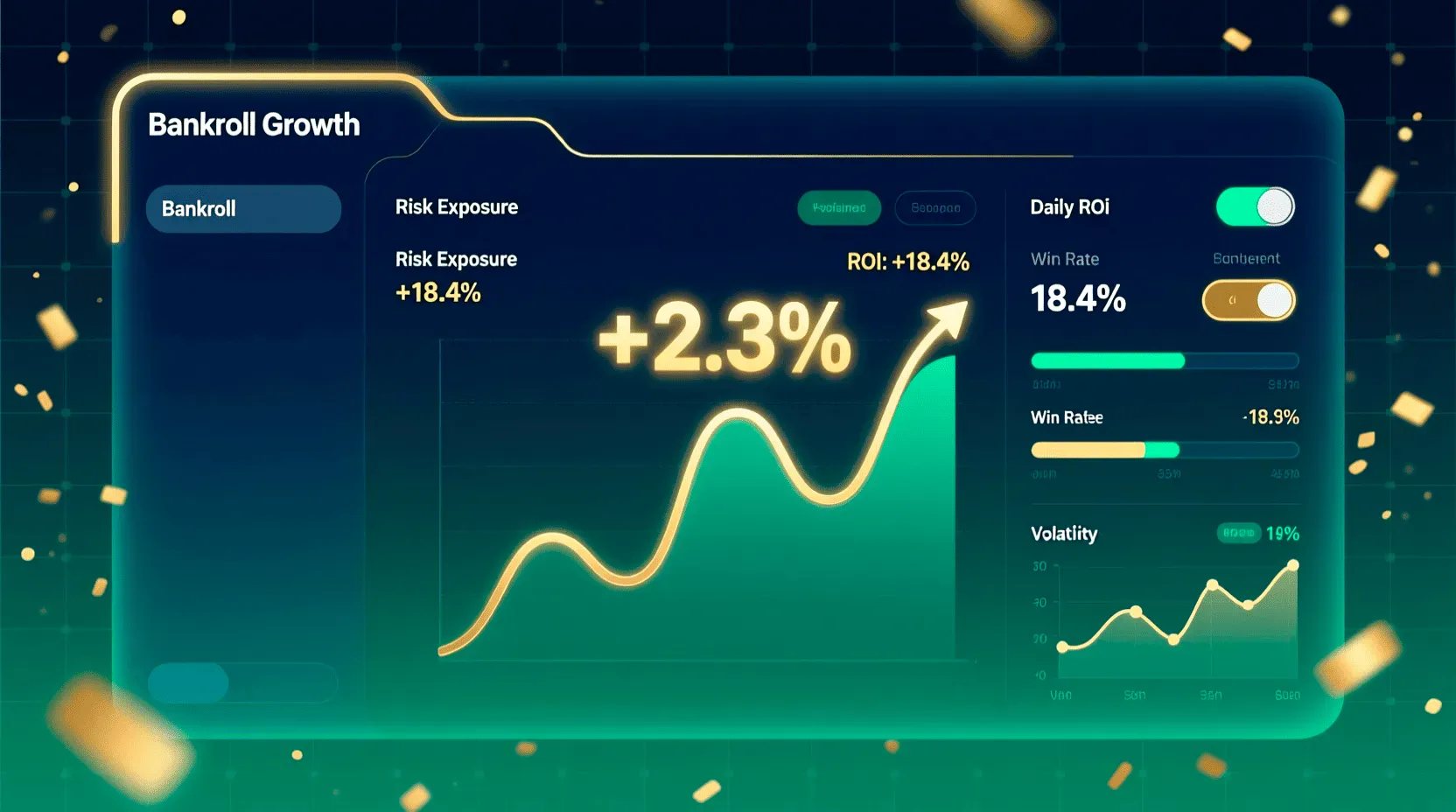
You’ve probably heard the advice before: only bet what you can afford to lose. Great. Super helpful. Right up there with “eat healthy and exercise” in terms of vague platitudes that everyone knows but nobody follows consistently. The problem isn’t that the advice is wrong, it’s that it stops short of actually telling you how to implement it.
Bankroll management is what separates people who enjoy betting as sustainable entertainment from people who blow through their entire paycheck in a weekend and wonder what happened. It’s not sexy. It won’t make you rich overnight. But it will keep you in the game long enough for skill to actually matter, and that’s worth more than any hot tip or can’t-miss parlay.
This guide covers the actual mechanics of managing your betting funds on Brom Bet. We’re talking about how much to deposit initially, how to size individual bets, when to add more money versus when to stop, tracking systems that actually work, and the psychological discipline required to stick to a plan when you’re tempted to deviate.
If you’re serious about betting beyond throwing money at random games and hoping for the best, this is where you start.
Bankroll management on brom bet.
Why Most Bettors Go Broke (And How to Avoid It)
Walk into any conversation about sports betting and you’ll hear stories about the guy who turned fifty bucks into five grand. What you won’t hear are the hundred stories about people who deposited two hundred dollars, had it down to zero within a week, deposited another two hundred, and repeated this cycle until finally admitting they’re not actually good at this.
The casino mentality is the first trap. People approach betting like pulling slot machine handles, making random wagers across dozens of games because action feels good. Every game on the board becomes an opportunity. You can’t just watch football, you need five different bets running simultaneously. This isn’t betting strategy, it’s gambling addiction with extra steps.
Betting too many games spreads your attention impossibly thin. You’re not actually analyzing fifteen different matchups with equal depth. You’re skimming surface information and convincing yourself you have an edge where none exists. The more bets you place, the more you regress toward the sportsbook’s built-in advantage. Volume works against you, not for you.
Overconfidence after early wins destroys more bankrolls than bad luck does. You deposit one hundred dollars, hit a three-team parlay, suddenly you’re up four hundred and feeling like a genius. The smart move is cashing out at least your initial deposit, if not more. What actually happens is thinking you’ve cracked the code and immediately betting bigger, often on worse selections, until the inevitable variance correction wipes you out.
The math is brutal and unavoidable. Even if you’re genuinely skilled and win fifty-five percent of your bets, you’re still losing forty-five percent of the time. That means nearly half your wagers are losers. If your bet sizing is too aggressive, a perfectly normal string of seven or eight losses in a row can eliminate your entire bankroll before your edge has time to manifest in profits.
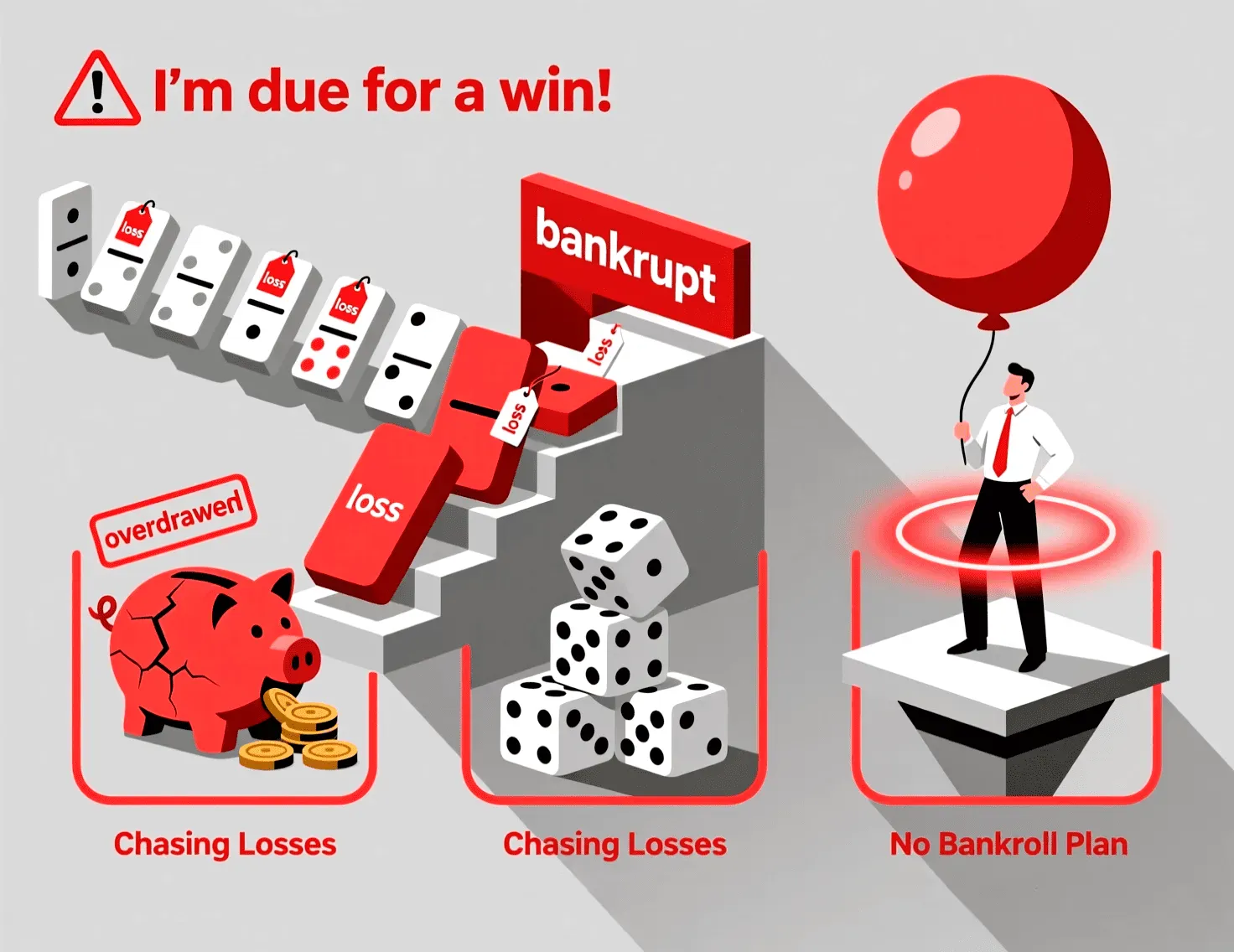
Chasing losses is the death spiral everyone swears they won’t fall into, and then they do anyway. You lose two bets in a row. Instead of sticking to your plan, you double your next bet to win back what you lost faster. This works sometimes, reinforcing the behavior. When it doesn’t work, you’ve compounded the problem exponentially. Three doubled-up losses later, you’re down eighty percent of your bankroll and panicking.
The fundamental misunderstanding is treating betting like a sprint when it’s actually a marathon. One great day doesn’t matter. One terrible week doesn’t matter. What matters is your trajectory over months. Bankroll management exists to ensure you survive variance long enough to see if you actually have an edge. Without it, you’re just another person funding the sportsbook’s profit margins.
Variance is not an excuse or a concept you can ignore. It’s a mathematical certainty. Streaks happen. Long losing streaks happen to good bettors. The question isn’t whether you’ll hit rough patches, it’s whether your bankroll management will let you survive them. Most people never find out because they go broke during their first serious downswing.
Setting Your Betting Budget the Right Way

Before depositing a single dollar, you need to decide how much money you’re allocating to betting. Not how much you have in your bank account. Not your disposable income this month. How much money you can lose completely without it affecting your actual life.
This number is different for everyone because everyone’s financial situation is different. For some people, it’s fifty dollars. For others, it’s five thousand. The amount doesn’t matter. What matters is that losing this money entirely causes zero financial hardship. It doesn’t delay rent. It doesn’t affect groceries. It doesn’t come out of money you need for anything else.
If you’re using money that you need for bills or emergencies, you’ve already lost regardless of betting outcomes. The stress of betting with scared money destroys your decision-making. Every loss feels catastrophic because it literally is, it’s money that needed to go somewhere else. You start making desperate decisions trying to recover, which accelerates the death spiral.
Your betting bankroll should be completely separate from your regular finances. Separate bank account if possible, or at minimum a clear mental division. This money is dead to you the moment you allocate it to betting. You’re not expecting to get it back. If you profit, fantastic. If you lose it all, life continues unchanged.
Starting small is always smarter than starting big. The temptation is depositing a large amount because you’re confident and want to win meaningful money quickly. Resist this. Confidence without experience is just arrogance, and the market will happily teach you expensive lessons. Start with an amount that feels almost too small. As you gain experience and prove consistent profitability, scale up gradually.
Most successful bettors recommend a starting bankroll that represents at minimum one hundred betting units at your intended unit size. If you’re planning to bet ten dollars per wager, you need at least one thousand dollars in your bankroll. If you’re planning to bet five dollars per wager, five hundred dollars minimum. This gives you the cushion necessary to withstand normal variance.
The reason for this large relative bankroll becomes clear when you run the math on losing streaks. If you’re winning fifty-five percent of your bets at minus-110 odds, you’re a profitable bettor. But you’ll still experience multiple ten-loss streaks over a sample of a few hundred bets. With a one-hundred-unit bankroll, losing ten units in a row is survivable. With a twenty-unit bankroll, you’re crippled or eliminated.
Growth expectations need to be realistic. This isn’t day trading crypto or hitting the lottery. Successful sports bettors who beat the market consistently might grow their bankroll by fifteen to thirty percent annually. That’s excellent performance and it’s also incredibly boring compared to fantasies of turning one hundred dollars into ten thousand in a month.
If your goal is getting rich quick through betting, you’re going to lose money. The house edge, the vig built into odds, ensures that only genuinely skilled bettors with proper bankroll management can achieve sustained profitability. Everyone else is paying entertainment tax in exchange for the excitement of having action on games.
Adding more money to your bankroll mid-stream requires honest self-assessment. If your bankroll is growing through winning bets, you don’t need to add more. If your bankroll is shrinking because you’re losing, adding more money is doubling down on a losing strategy. The only good reason to add funds is if your initial bankroll was too small for your goals and you’re still learning the ropes.
Withdrawing from your bankroll is something recreational bettors should do regularly. If you’re up fifty percent from your starting amount, consider withdrawing that profit and treating yourself to something fun. This locks in wins and reminds you that profit is real, not just numbers on a screen. Professional bettors might leave profits in play to compound growth, but they’re also running this like a business with different expectations.
Unit Sizing: The Foundation of Success
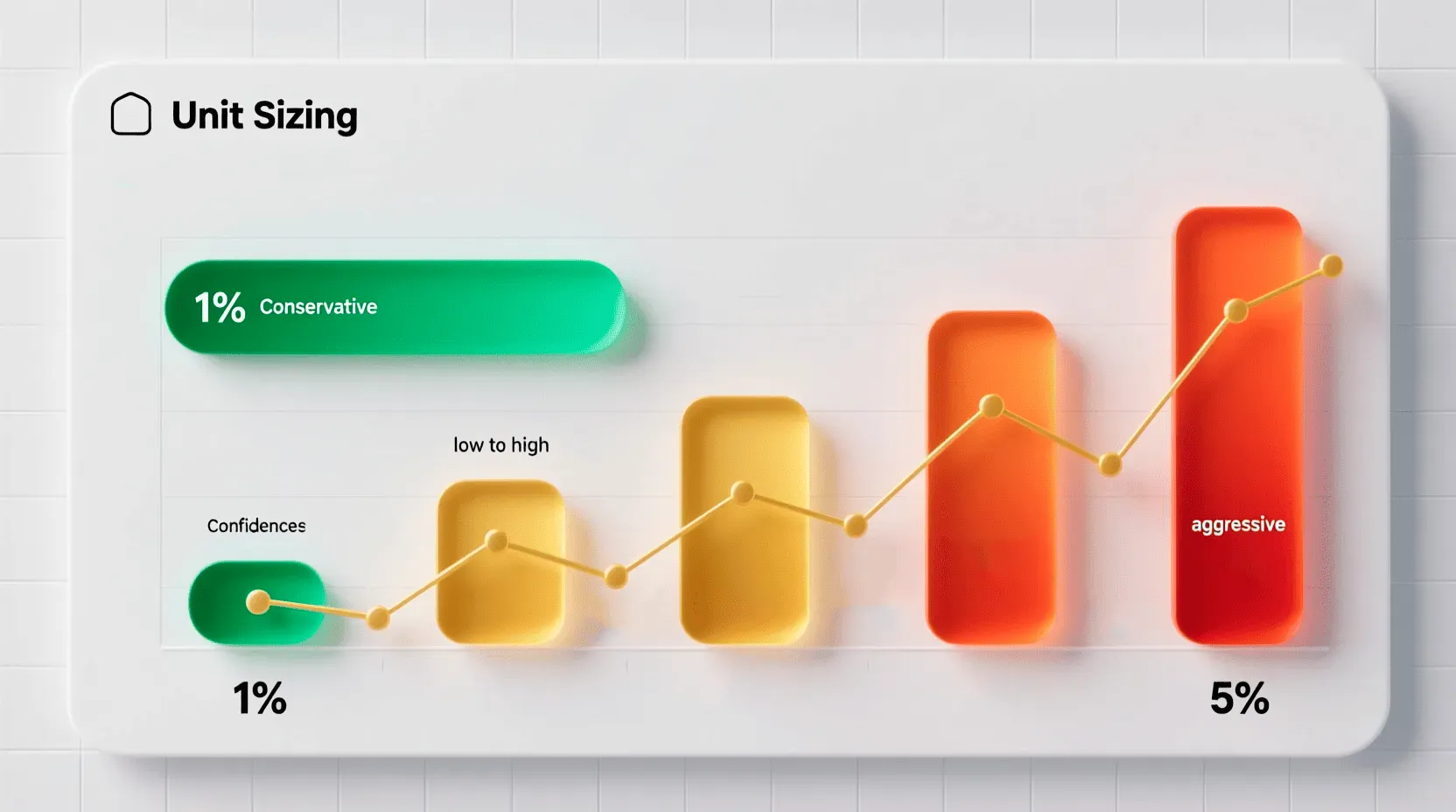
A betting unit is your standard wager amount, and it should be a small percentage of your total bankroll. This percentage determines your risk tolerance and survival probability during downswings. Conservative bettors use one percent per unit. Moderate bettors use two to three percent. Aggressive bettors use four to five percent. Going above five percent is reckless unless you have specific reasons backed by serious expertise.
The one percent rule is the gold standard for long-term survival. With a one-thousand-dollar bankroll, your standard bet is ten dollars. This feels tiny, almost not worth the effort. That’s exactly the point. You need to be able to withstand fifty, sixty, even seventy consecutive losses without being eliminated. That’s not a realistic losing streak, but if you could theoretically survive it, you can definitely survive realistic variance.
At two to three percent per unit, you’re accepting more risk for faster potential growth. A one-thousand-dollar bankroll means twenty to thirty-dollar bets. This is the sweet spot for many bettors who have proven edges and want meaningful returns without excessive risk. You can survive twenty to thirty consecutive losses, which is within the realm of possible but still unlikely.
Four to five percent per unit is for experienced bettors who understand exactly what they’re doing and why. You’re risking substantial portions of your bankroll on each bet, meaning a bad run of ten or fifteen losses seriously damages your account. This only makes sense if your edge is proven and significant, and even then, the risk might not be worth the marginal increase in expected returns.
Flat betting means every wager is the same size regardless of the situation. You bet one unit on the heavy favorite and one unit on the longshot underdog. This approach is simple, mathematically sound, and removes emotional decision-making about bet sizing. Most bettors should flat bet until they have significant experience and data proving they can accurately assess their confidence levels.
Variable unit sizing based on confidence is appealing in theory and dangerous in practice. The idea is betting more on your strongest plays and less on speculative ones. Maybe you bet three units on games you’ve researched extensively and half a unit on hunches. This works if you’re genuinely better at identifying your strong plays. Most people aren’t. They overestimate confidence and end up making their biggest bets on their biggest mistakes.
If you do use variable sizing, the range should be narrow. Maybe your plays range from 0.5 units to 2 units, never more. Anything beyond that is introducing excessive variance based on conviction that’s probably not as well-calibrated as you think. And track your results by unit size, if your three-unit plays perform worse than your one-unit plays, that’s telling you something important.
Adjusting unit size over time is necessary as your bankroll changes. If you started with one thousand dollars and now have two thousand through profitable betting, your unit size should increase proportionally. If you were betting ten dollars per unit, you should now be betting twenty dollars per unit. This lets your profits compound while maintaining the same risk level relative to your bankroll.
The opposite applies when losing. If your bankroll shrinks by thirty or forty percent, reduce your unit size accordingly. Don’t try to “bet your way back” to the original amount with the same bet sizes. That’s chasing losses with extra steps. Accept the temporary setback, adjust your unit size down, and let any edge you have work slowly to recover.
Recalculating unit size should happen on a schedule, not continuously. Some bettors adjust weekly, others monthly. The point is avoiding emotional decisions in the moment. If you’re recalculating after every bet, you’re overthinking it and introducing inconsistency. Pick a frequency and stick to it.
The Kelly Criterion and Advanced Sizing
The Kelly Criterion is a mathematical formula for optimal bet sizing based on your edge and the odds you’re getting. It maximizes long-term bankroll growth while minimizing risk of ruin. The formula is simple: edge divided by decimal odds minus one. Your edge is the difference between the true probability and the implied probability from odds.
Here’s the problem: Kelly assumes you know your exact edge, and you don’t. You think you have an edge. You might be right. You might be wildly wrong. Even professional bettors with years of tracked results struggle to calculate their precise edge across different bet types and situations. For casual bettors, it’s pure guesswork dressed up as math.
Full Kelly sizing is also far too aggressive for most people’s risk tolerance. If Kelly says bet fifteen percent of your bankroll, that recommendation comes with the possibility of fifty percent drawdowns. Mathematically optimal doesn’t mean emotionally sustainable. Most people can’t handle watching half their bankroll evaporate even if the math says it’s correct long-term.
Fractional Kelly is the practical solution. Use quarter-Kelly or half-Kelly, which means taking Kelly’s recommendation and dividing by four or two. This dramatically reduces volatility while sacrificing relatively little expected growth. Quarter-Kelly in particular is conservative enough that most bettors can stick with it through rough patches without panic-selling their strategy.
The real value of understanding Kelly isn’t using the formula directly. It’s understanding the relationship between edge, odds, and optimal sizing. Big edges justify bigger bets. Small edges justify smaller bets. No edge means no bet. This framework helps you think about sizing strategically instead of randomly deciding amounts based on gut feeling.
Most recreational bettors should ignore Kelly entirely and stick with flat betting at one to three percent per unit. Kelly is for people who are tracking every bet in spreadsheets, calculating historical edges across hundreds of wagers, and constantly reassessing their skill level. If that’s not you, simpler approaches work better and introduce fewer opportunities for self-deception.
Tracking and Analyzing Your Bets

You cannot manage what you do not measure. This is true in business, fitness, personal finance, and betting. If you’re not tracking your bets systematically, you have no idea whether you’re actually profitable or just lucky recently. You don’t know which bet types you’re good at and which ones lose money. You’re flying blind.
A simple spreadsheet works perfectly. Date, sport, bet type, selection, odds, stake, result, profit or loss. Those eight columns tell you everything you need to know. More sophisticated trackers add categories like unit size, closing line value, and notes about reasoning. Start simple and add complexity only if you find it useful.
Recording every bet is non-negotiable. Not just the winners. Not just the big bets. Every single wager, including the five-dollar longshot parlay you threw in for fun. If money left your bankroll, it goes in the spreadsheet. The bets you’re tempted to hide from your tracking are usually the ones that reveal your worst habits.
Calculate your return on investment by dividing total profit by total amount wagered. If you’ve bet ten thousand dollars across one hundred wagers and you’re up five hundred dollars, your ROI is five percent. That’s excellent. If you’re down two hundred dollars, your ROI is negative two percent, and you need to figure out why before continuing.
Track performance by bet type separately. Maybe you’re profitable on NFL spreads but lose money on NBA totals. Maybe your moneyline record is solid but your parlays are bankroll killers. This granular view reveals where your edge actually exists and where you’re donating money to the sportsbook.
Win rate alone is misleading without context. Winning sixty percent of your bets sounds great until you realize all your winners were at minus-150 odds and your losers were at plus-120. You need a fifty-six percent win rate at those odds just to break even. Calculating your break-even win rate for your average odds helps contextualize whether your results are actually good.
Closing line value is arguably the most important metric for serious bettors. If you consistently get better numbers than where lines close, you’re a sharp bettor regardless of short-term results. If you consistently get worse numbers than closing lines, variance is temporarily masking the fact that you’re losing money long-term. Track the odds you got versus closing odds for every bet.
Monthly and quarterly reviews identify trends that daily tracking misses. Maybe you’re profitable every month except during NFL playoffs when you bet too many games. Maybe summer baseball is your strength but winter basketball is your weakness. These patterns become obvious over time if you’re recording everything.
Honest self-assessment requires emotional detachment. When reviewing your bets, you’ll see mistakes. Dumb decisions. Bets you had no business making. This isn’t a referendum on your worth as a person. It’s data showing you what to adjust. If you can’t look at your losing bets without feeling defensive or trying to justify them, you’re not ready to improve.
Emotional Discipline and Tilt Management

Bankroll management isn’t just numbers and percentages. It’s psychology. You can have perfect math and still destroy your account if you can’t control emotional impulses during rough patches. Tilt is the enemy, and everyone experiences it eventually.
Tilt happens when emotions override your rational process. You lose a few bets and suddenly you’re angry, frustrated, or desperate to win back what you lost immediately. This manifests as bigger bets, worse selections, or chasing any available action just to feel like you’re fighting back. Every single one of these tilted decisions makes things worse.
Recognizing tilt in the moment is hard because you’re not thinking clearly. That’s literally the problem. But there are warning signs: betting outside your normal sports, increasing stake sizes suddenly, placing bets impulsively without research, betting to “get even” for the day. If you notice any of these patterns, stop. Close the app. Walk away.
Having a stop-loss rule for daily or weekly losses prevents tilt from spiraling. If you lose five percent of your bankroll in a day, you’re done betting for the day. No exceptions. Doesn’t matter if the biggest game of the week is that night. You’ve hit your limit, and continuing while emotionally compromised will only compound the damage.
Winning streaks create their own form of tilt. You hit four bets in a row and suddenly feel invincible. You start thinking you’ve figured something out, that you’re on a heater that will continue indefinitely. So you bet bigger and take worse value because you’re overconfident. Then variance corrects and you give back all your profit plus more.
Taking breaks after big wins is just as important as taking breaks after losses. If you’re up significantly, cash some out and give yourself a day or two away from betting. This prevents the overconfidence that leads to giving everything back. Sustained success comes from consistent discipline, not riding hot streaks into the ground.
The reality is that sports betting is designed to be exciting, and excitement triggers emotional responses. The sportsbook benefits from your emotional decisions. They’re not rooting against you personally, they’re just operating a system where emotional bettors lose money consistently. The more you can remove emotion and bet mechanically according to your plan, the better your results.
Bankroll Management by Betting Style
Different approaches to betting require different bankroll strategies. The conservative grinder betting one percent units on researched plays needs less bankroll relative to their goals than the aggressive parlay player swinging for the fences. Neither approach is inherently wrong, but they demand different management.
Conservative bettors prioritize survival and steady growth. One percent units, flat betting, highly selective with maybe five to ten bets per week. This approach has minimal variance and can achieve consistent profit with a legitimate edge. The drawback is that returns are slow. You’re not getting rich. You’re slowly compounding a small edge over years.
For conservative bettors, a fifty to one-hundred unit bankroll is sufficient. You’re never going to lose enough consecutive bets to threaten bankruptcy at one percent risk per wager. Your main enemy is boredom leading to placing bets you shouldn’t just to have action. Discipline is everything.
Moderate bettors balance growth with risk. Two to three percent units, selective betting but willing to have multiple games going simultaneously if the value is there. This is where most successful recreational bettors land. Returns are meaningful without requiring massive bankroll or exposing yourself to catastrophic variance.
Moderate bettors need one-hundred to two-hundred unit bankrolls. The increased variance from larger unit sizes means you need more cushion to survive realistic downswings. This approach works well if you’ve established consistent profitability and want to scale up gradually.
Aggressive bettors chase faster growth with higher risk. Four to five percent units, sometimes variable sizing with even larger bets on premium plays. This can work if you genuinely have significant edges and accept that massive drawdowns are inevitable. Most people who think they’re aggressive bettors are actually just reckless.
Aggressive bettors need two-hundred-plus unit bankrolls at minimum. Even then, experiencing fifty percent drawdowns is likely. If you can’t emotionally handle watching half your bankroll disappear during a bad run, aggressive sizing will break you. The math might work long-term, but only if you survive psychologically to the long term.
Parlay specialists face unique bankroll challenges. Parlays have such high variance that normal unit sizing doesn’t apply cleanly. Most sharp bettors avoid parlays entirely because the vig is so high. If you’re betting parlays for entertainment, keep them to tiny fractions of your bankroll. Half a unit or less per parlay. They’re lottery tickets that sometimes hit, treat them accordingly.
Live bettors need extra bankroll relative to their volume because live betting encourages impulsive decisions. Having action constantly available makes it harder to be selective. If you’re primarily live betting, consider being even more conservative with unit sizing to compensate for the increased temptation to overbet.
Bankroll management is betting’s least exciting topic and its most important one. You can be the world’s greatest handicapper and go broke without proper money management. You can be a mediocre handicapper and survive indefinitely with conservative sizing. The difference comes down to discipline.
Starting with a proper bankroll, setting realistic unit sizes, tracking everything, and maintaining emotional control through variance aren’t sexy strategies. They don’t make for good stories. They’re boring and methodical. They also work, which is more than can be said for most betting advice.
Most people who fail at sports betting don’t fail because they’re bad at picking games. They fail because they bet too much too often on too many games without any systematic approach to managing risk. The game selection matters less than the risk management. You can be right sixty percent of the time and still go broke with poor bankroll discipline.
The goal isn’t never losing. Everyone loses. The goal is still being around after the inevitable downswings so your edge has time to manifest in profit. That requires a bankroll sized appropriately for your goals, unit sizing that protects you from ruin, honest tracking of your results, and the emotional discipline to stick to your plan when variance tests you.
If this all sounds like too much work, that’s fine. Bet for entertainment without worrying about long-term profit. Nothing wrong with that as long as you’re honest about what you’re doing. But if you want to take betting seriously as a skill-based activity where sustained profit is possible, bankroll management is the foundation everything else builds on.
See also the detailed bankroll guide.
