


The question of whether to bet before games or during them divides the sports betting community more than most strategic debates. Traditionalists argue that thorough pregame analysis produces the most reliable edges, while live betting evangelists point to the exploitable inefficiencies that appear when sportsbooks price markets in real-time. Both sides marshal evidence and anecdotes to support their positions, yet the truth is more nuanced than either camp typically acknowledges.
The practical answer depends heavily on your specific skills, available time, and betting style. A bettor who excels at statistical modeling and has limited time to watch games will find pregame betting more suitable. Someone who watches every game intently and makes quick, accurate reads on game flow might thrive in live markets. Understanding the genuine advantages and limitations of each approach helps you determine where your efforts should focus.
Live vs pre-game betting on brom bet.
The Case for Pregame Betting
Pregame betting offers time that live betting cannot provide. You can research matchups for hours or days, compare odds across multiple sportsbooks, build models, consult injury reports, and make deliberate decisions without clock pressure. This temporal luxury allows for higher-quality analysis than the rushed decisions live betting requires.
The odds themselves are often more favorable pregame. Standard juice on pregame spreads runs around -110, while live betting frequently carries higher vig, sometimes -114 or worse. This elevated margin means live bettors need larger edges just to match pregame profitability. Over thousands of bets, the juice differential compounds into meaningful money.
Line shopping works more effectively pregame. You have time to check six or eight sportsbooks, compare prices, and take the best available number. Live betting’s speed makes this impractical; by the time you’ve checked multiple books, the opportunity has often disappeared. The pregame shopper captures value that live bettors cannot access.
Pregame markets are also deeper and more liquid. You can find action on obscure props, alternate lines, and niche markets that don’t exist in live betting. This variety creates more potential edges for bettors with specialized knowledge. If you have expertise in first-half totals or third-quarter spreads, those markets are pregame propositions.
The research infrastructure supporting pregame betting is extensive. Power ratings, predictive models, injury databases, and trend tools are designed primarily for pregame analysis. This ecosystem of resources amplifies the edge available to serious pregame bettors in ways that live betting lacks.
The Case for Live Betting
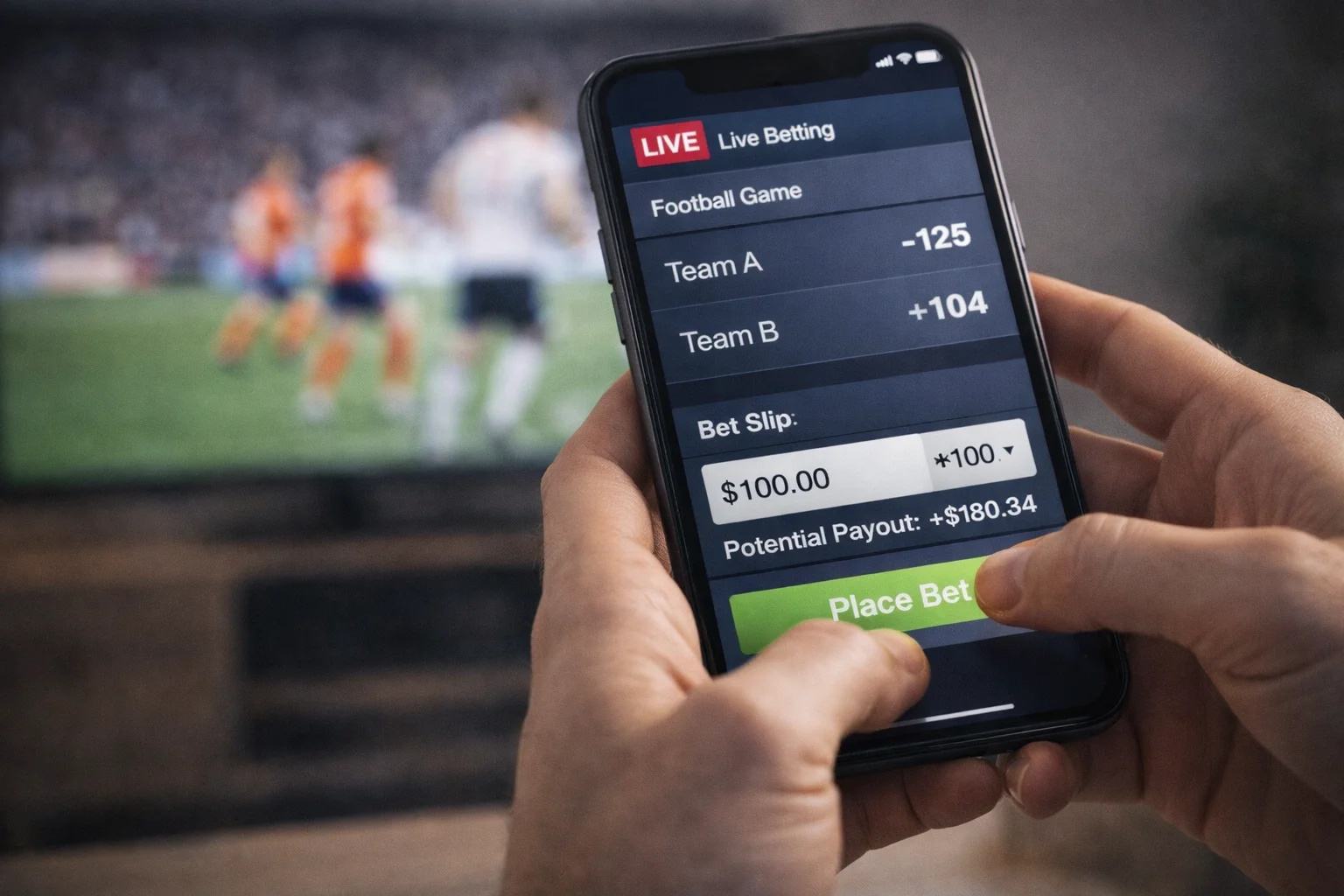
Live betting proponents argue that the format’s challenges create compensating opportunities. Sportsbooks must price markets in real-time using algorithms that can’t perfectly capture game dynamics. This algorithmic imperfection creates soft spots that observant bettors can exploit.
Information advantages appear during games that didn’t exist pregame. A quarterback looks injured but hasn’t been officially ruled out. The wind has shifted since the forecast. A team’s star player seems disengaged. A coaching staff is making unusual strategic choices. These observations, visible to anyone watching closely, might not be reflected in live lines for minutes or even quarters.
The ability to react to pregame analysis errors gives live bettors a second chance. If you identified value on a team pregame but didn’t bet, or if new information changes your assessment, live betting lets you act on your updated view. You’re not locked into predictions made days before kickoff.
Middling and hedging opportunities appear in live markets that pregame betting cannot offer. If you hold a pregame position and the game develops favorably, you might find live odds that let you guarantee profit regardless of the final outcome. These dynamic plays add tools unavailable to pregame-only bettors.
The sheer volume of live betting opportunities exceeds pregame possibilities. Every game generates dozens of decision points as the action unfolds. For bettors with genuine skill at real-time evaluation, this volume means more chances to deploy edge throughout each betting day.
Skill Requirements Differ
The skills that produce pregame success differ substantially from those needed for live betting. Understanding whether your capabilities match each format’s demands helps determine where to focus.
Pregame betting rewards research capacity, statistical literacy, and systematic thinking. You need to process large amounts of information, build or interpret models, and identify where market prices diverge from your probability assessments. Patience matters; you might analyze twenty games to find three worth betting.
Live betting demands different attributes. Quick information processing and decisive action under time pressure are essential. You need strong game sense, the ability to read how a game is flowing beyond what the scoreboard shows. Emotional discipline matters intensely because the constant action tempts impulsive betting.
The time commitment also differs. Pregame betting can be done efficiently in concentrated research sessions disconnected from game times. Live betting requires being present and attentive during games themselves, which might mean hours of focused watching for limited betting opportunities.
Honestly assess which skill set matches your strengths. Bettors who try formats unsuited to their abilities typically underperform what they’d achieve by sticking to their natural approach.
Market Efficiency Considerations
Both pregame and live markets are efficient enough to make consistent profits difficult, but inefficiencies appear in different places within each format.
Pregame lines benefit from extended price discovery. Sharp bettors attack opening lines immediately when value appears, and the ensuing movement corrects most mispricings before game time. By kickoff, pregame lines typically reflect substantial collective wisdom. The value windows are narrow and fleeting.
Live lines face different efficiency challenges. Algorithms struggle with qualitative factors that humans observe easily. Momentum, fatigue, motivation, and tactical adjustments don’t translate neatly into mathematical models. These gaps create inefficiency but are hard to exploit consistently because identifying them requires skills most bettors don’t possess.
The speed of live markets means inefficiencies close faster than pregame opportunities. A pregame value spot might last hours; a live value spot might last seconds. This compression favors bettors with superior technology, information access, and execution speed.
Different sports present different efficiency profiles. NFL live betting can be quite efficient due to the game’s structure and high liquidity. NBA live betting shows more exploitable inefficiency given the constant scoring and momentum shifts. Lower-profile events in any sport tend to have less efficient live markets.
Combining Both Approaches
Many successful bettors use both pregame and live betting rather than committing exclusively to one approach. The combination creates synergies neither method offers alone.
Pregame research establishes a baseline understanding of matchups that informs live betting decisions. Knowing which team has the superior rushing attack or which defense struggles against motion helps interpret live game developments. Your pregame work makes you a better live bettor.
Live observations can validate or invalidate pregame assessments. If your pregame analysis suggested the underdog would struggle but they’re dominating early, the live market might offer better prices than pregame did. Alternatively, if your pregame read looks correct, live betting lets you add to your position.
The hedging and middling possibilities from combining approaches add strategic flexibility. A pregame bet that moves into profit territory creates live hedging options. A pregame opinion that strengthens during the game can be supplemented with live additions at potentially better prices.
Position management across both timeframes requires discipline. The goal isn’t to have action constantly but to deploy capital where edges genuinely exist. Some games warrant pregame bets only; some warrant live bets only; some warrant both; and many warrant neither.
Practical Recommendations

If you’re primarily analytical and time-constrained, emphasize pregame betting. Your edge likely comes from research and modeling rather than real-time observation. Trying to force live betting into your approach will probably reduce overall performance.
If you watch games intensively and make accurate reads on game flow, explore live betting seriously. Your observational skills might generate edges that pure statisticians cannot access. But maintain discipline against the format’s temptation to overbet.
If you’re new to betting, start with pregame until you develop solid analytical foundations. Live betting is more challenging and carries greater risk of behavioral mistakes. Building good habits pregame creates a framework you can later apply to live markets.
Track your results separately for pregame and live betting. Many bettors assume they’re profitable in both formats without data to confirm it. You might discover that one approach consistently produces better results, suggesting where to concentrate future efforts.
Consider your bankroll management across both formats. If live betting encourages you to place more bets per game than pregame analysis would suggest, you might be sacrificing edge for action. The goal is maximizing expected value, not maximizing entertainment.
The pregame versus live debate has no universal answer because bettors differ in their skills, circumstances, and temperaments. Rather than declaring one approach superior, understand what each offers and where your particular strengths fit. The most profitable approach is whichever one you execute well given your individual profile.
See also our live betting page.
