


The path from recreational bettor to unprofitable recreational bettor runs through a remarkably consistent set of errors. Despite the internet overflowing with betting advice and cautionary tales, the same mistakes claim new victims daily. Understanding these pitfalls won’t automatically make you profitable, but it removes the self-inflicted wounds that accelerate bankroll destruction.
Most betting mistakes stem from psychological biases rather than lack of knowledge. You probably already know chasing losses is bad and bankroll management matters. Yet in the heat of a losing streak or the excitement of a “can’t-lose” opportunity, knowledge evaporates and emotions take over. The goal isn’t just understanding these mistakes intellectually but building systems and habits that prevent them when your judgment is compromised.
Common betting mistakes on brom bet.
Chasing Losses
The most destructive mistake in gambling history, chasing losses transforms bad days into catastrophic ones. The pattern is familiar: you lose a couple of bets, feel the frustration of being down, and decide to increase your bet size to “get back to even.” When that larger bet loses too, you double down again. Within hours, a manageable losing day becomes a bankroll-crippling disaster.
Chasing fails because previous losses have no bearing on future results. The universe doesn’t owe you a winner because you’ve had bad luck. Each bet exists independently, and increasing your stake doesn’t improve your probability of winning. All chasing does is amplify the variance you’re already experiencing, turning standard fluctuations into potential ruin.
The fix requires pre-commitment strategies that limit your ability to chase. Set daily loss limits before you start betting and stop when you hit them, no exceptions. Some bettors physically separate themselves from betting apps after reaching their limit, deleting the apps temporarily or giving a trusted friend control of their login credentials. The key is making chasing difficult in the moment when your judgment is impaired.
Ignoring Bankroll Management
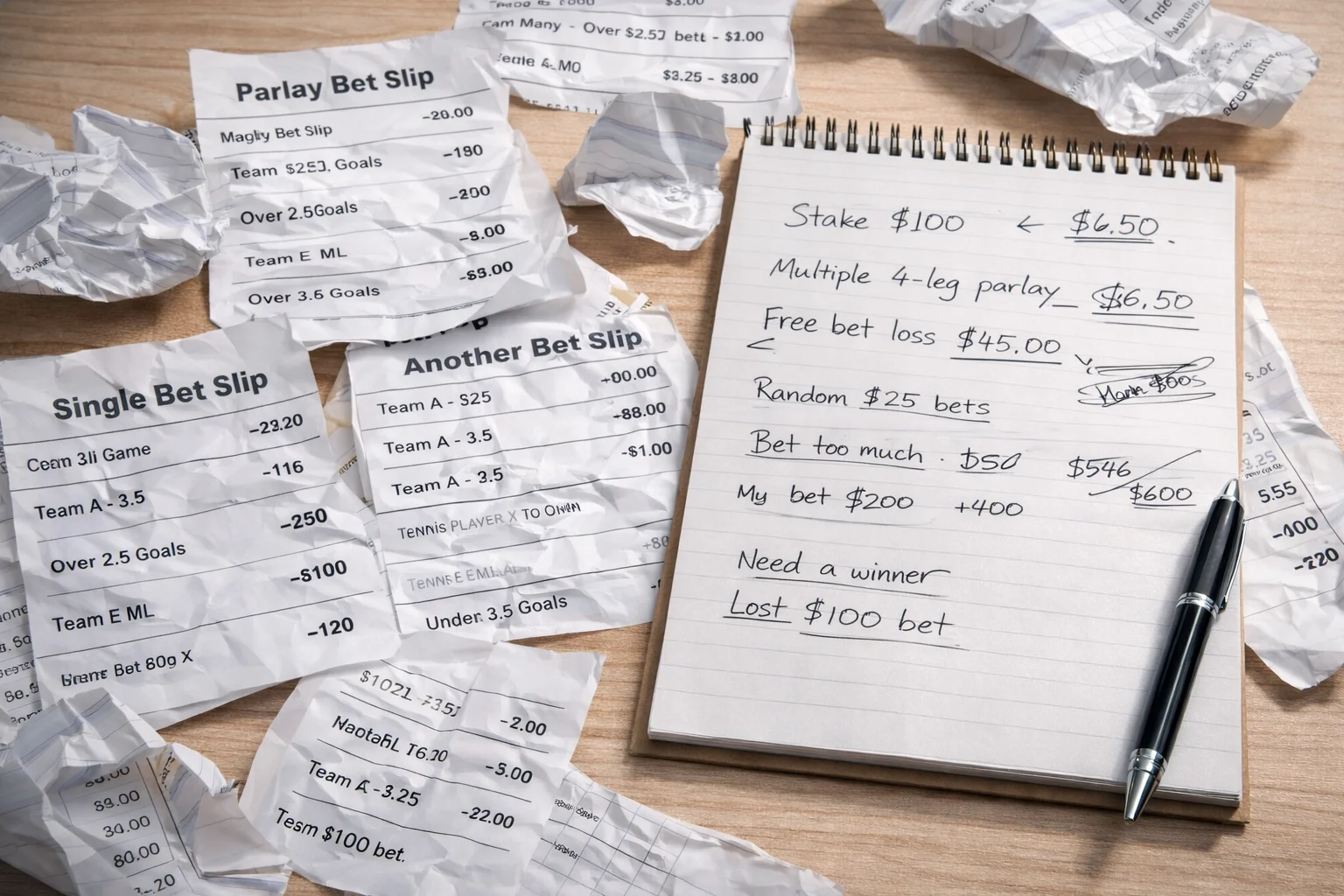
Many bettors have no defined bankroll and no consistent bet sizing. They bet whatever feels right in the moment, sometimes $20 on a random game and sometimes $500 on a “sure thing.” This approach guarantees eventual bust because even good bettors experience losing streaks that would wipe out poorly managed funds.
Proper bankroll management starts with defining a dedicated betting bankroll separate from other money. This amount should be completely expendable; its loss should not affect your life. From there, bet consistent percentages, typically 1-3% per wager, regardless of confidence level. The flat-betting approach feels boring but dramatically extends your runway through inevitable rough patches.
See also bankroll management.
The psychological challenge involves accepting that proper sizing means smaller bets than you want to make. When you’re excited about a bet, risking 1% of your bankroll feels inadequate. But those feelings are precisely what lead to oversized bets on “locks” that lose at the same rate as regular bets. Discipline means following your system especially when it conflicts with your emotions.
Betting Without a Strategy
Recreational bettors often bet based on feelings, hunches, or loyalty rather than systematic analysis. They back their favorite teams, fade teams they dislike, or follow public narratives without examining whether those narratives align with value. This approach is entertainment, not investing, and should be sized accordingly.
Developing a strategy doesn’t require becoming a professional handicapper. It means having defined criteria for what constitutes a bet worth making. Maybe you only bet when your power ratings diverge significantly from the market. Maybe you focus on specific situations where you’ve identified edge. Maybe you simply follow closing line value, betting only when you can beat the closing number.
Whatever your approach, writing it down forces clarity. Document what you’re looking for, how you identify bets, and what would make you abandon a position. Review your results against your strategy regularly. This systematic approach reveals whether your edge is real or imagined and helps refine your process over time.
Overvaluing Recent Performance
Recency bias leads bettors to overweight recent results when assessing teams. A team that won three straight becomes unbeatable in many bettors’ minds; a team on a losing streak seems destined to continue losing. But short-term results often reflect variance more than true quality changes.
Sportsbooks exploit this tendency by shading lines toward recent winners and away from recent losers. The public piles onto hot teams at inflated prices while ignoring cold teams that might offer value. By the time a streak becomes widely known, it’s already priced into the market.
The correction involves focusing on underlying metrics rather than results. Examine point differentials, advanced statistics, and process indicators that predict future performance better than wins and losses alone. A team that went 1-3 while losing three games by a combined six points might be undervalued; a team that went 3-1 while winning by lucky bounces might be overpriced.
Betting Too Many Games
The recreational impulse to have action on every game guarantees negative expected value. Sportsbooks offer hundreds of markets daily, and profitable opportunities exist in only a small percentage. Betting widely without selection criteria means paying juice on bets where you have no edge.
Sharp bettors are remarkably selective. They might analyze dozens of games but bet only a handful where their numbers diverge meaningfully from the market. Each bet carries edge rather than being placed for action’s sake. This restraint is difficult for action-oriented bettors but essential for profitability.
If you find yourself betting because you need something to watch or because you’re bored, recognize that as entertainment spending rather than serious betting. There’s nothing wrong with entertainment betting when sized appropriately, but confusing it with strategic wagering leads to oversized entertainment expenses.
Ignoring the Juice
Many bettors think only about whether they’re picking winners without considering the price paid. Winning 52% of your bets sounds profitable until you realize you’re paying -110 juice and need 52.4% to break even. That narrow margin means a bettor at 52% is actually losing money over time.
The vig compounds across bet types, with parlays, teasers, and props often carrying higher juice than standard spreads. A bettor who wins 54% on spreads but mixes in -120 props and high-vig parlays might be a net loser despite the solid spread record.
Tracking your results by bet type and average odds paid reveals where juice is eating your profits. You might discover that certain bet types consistently lose despite reasonable pick rates simply because the prices are unfavorable. Line shopping reduces juice impact, but awareness of how it affects each bet category guides better overall strategy.
Letting Emotions Drive Decisions
Betting on your favorite team or against rivals you hate feels natural but introduces bias that undermines analysis. You’ll overvalue your team’s chances and undervalue their opponents, consistently taking bad prices on one side of the market. The emotional investment that makes fandom enjoyable actively harms betting results.
Some bettors abstain from betting games involving teams they care about, removing bias from the equation entirely. Others acknowledge their bias and demand significantly better prices before betting their favorite teams, essentially building in a handicap for their compromised judgment.
Similarly, betting to root for outcomes rather than to make money leads to poor decisions. Taking the over because you want to see scoring, or backing the underdog because upsets are exciting, or parlaying long shots because big payouts would be thrilling: these motives produce worse bets than dispassionate analysis.
Failing to Track Results
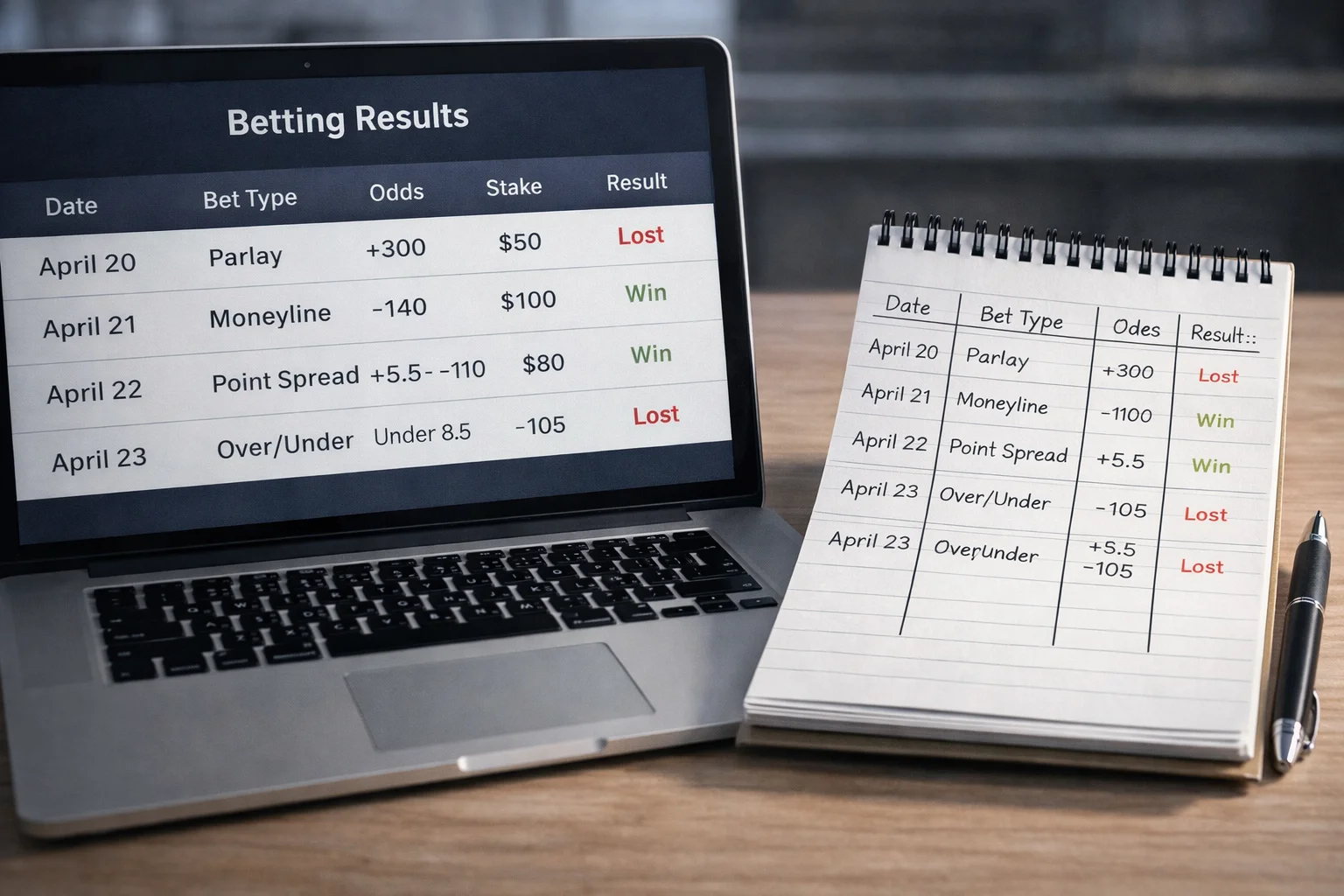
Most losing bettors don’t know they’re losing. They remember their big wins vividly while forgetting the steady accumulation of losses that more than offset them. This selective memory prevents accurate self-assessment and perpetuates unprofitable approaches.
Tracking every bet forces honesty about your results. Record the date, sport, bet type, odds, stake, and result for every wager. Calculate your ROI by bet type, sport, and time period. This data reveals patterns you wouldn’t otherwise notice: maybe you crush NFL but bleed money on NBA, or your props lose while your sides win.
Tracking also enables improvement. When you identify weak areas, you can either work on improving them or stop betting those categories entirely. Without data, you’re flying blind, making the same mistakes repeatedly without recognizing them.
Overconfidence in Analysis
The Dunning-Kruger effect runs rampant in sports betting. Bettors who’ve read a few articles or had a hot streak convince themselves they’ve discovered edges that elude the efficient market. In reality, beating the closing line consistently requires exceptional skill that most bettors don’t possess.
Honest assessment of your actual edge is difficult but necessary. If you’re not tracking closing line value, you have no objective measure of your skill. Results over small samples tell you almost nothing due to variance. Claiming edge without evidence is self-deception.
The appropriate response is humility. Assume you don’t have edge until you can prove otherwise through meaningful sample sizes and CLV tracking. Size your bets conservatively to reflect uncertainty about your actual skill level. Treat betting as a learning process rather than a profit center until you’ve demonstrated consistent results.
Betting Under Impaired Conditions
Alcohol, fatigue, emotional distress, and other impairments devastate betting judgment. Drunk betting in particular leads to terrible decisions: oversized bets, chasing, abandoning strategy, and generally doing everything wrong simultaneously. A single night of impaired betting can undo months of disciplined work.
The solution is absolute rules: never bet while drinking, never bet when exhausted, never bet when emotionally compromised by external circumstances. These rules feel extreme until you’ve experienced or witnessed the damage impaired betting causes.
Building in cooling-off periods before placing bets provides protection. If you identify a bet you want to make, wait an hour before acting. This pause allows emotional reactions to subside and rational evaluation to occur. Bets that still look good after the delay are more likely to be sound than impulse bets placed immediately.
The common thread across these mistakes is that they’re easier to understand than to avoid. Knowledge alone doesn’t prevent chasing losses or emotional betting; systems and habits that constrain behavior in the moment are required. Building those systems is the real work of becoming a more disciplined bettor, and it’s work that never fully ends regardless of your experience level.
