

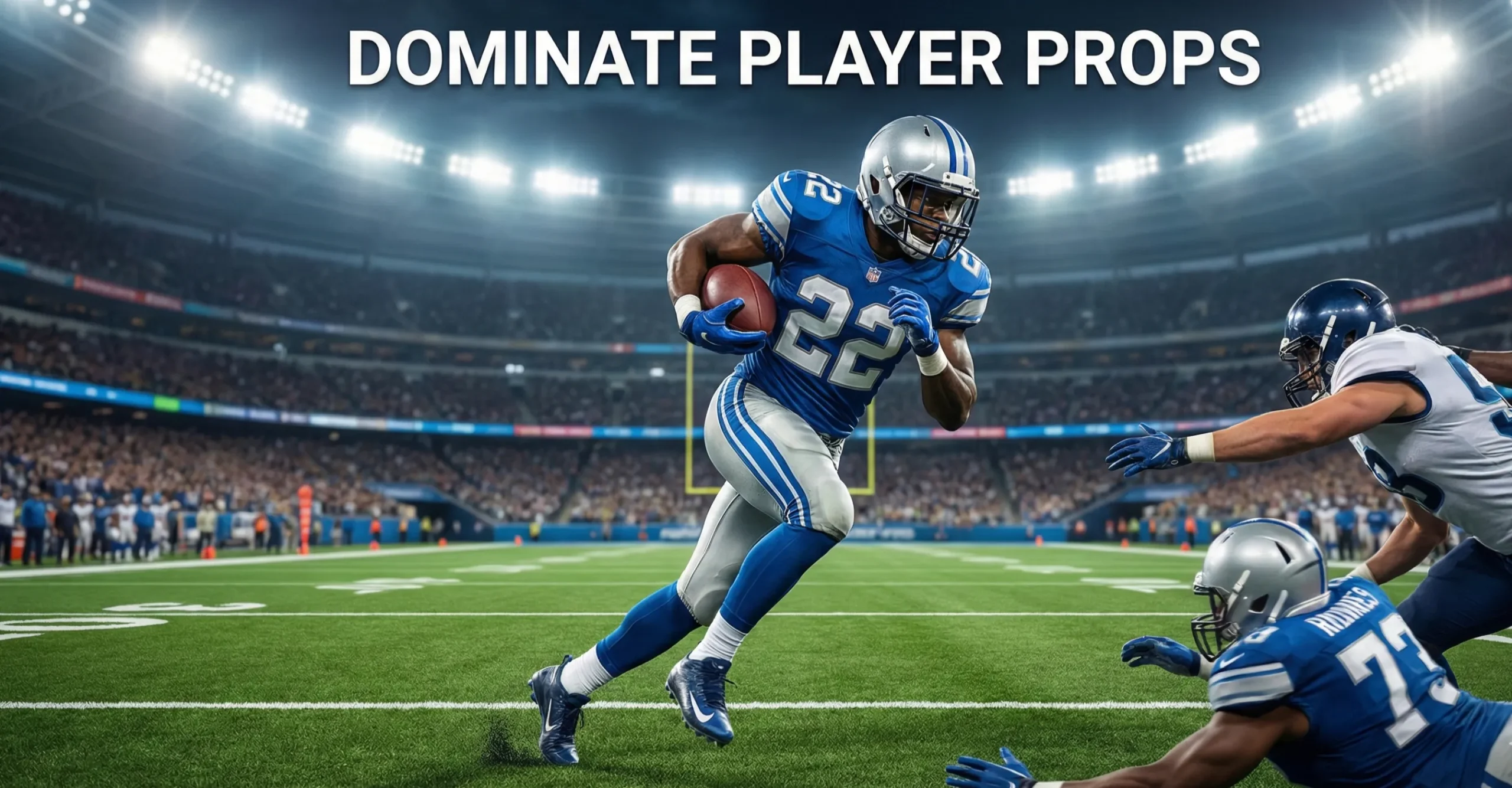
The explosion of proposition betting has transformed how fans engage with sports. No longer must you predict winners or scores to have action on a game. Prop bets let you wager on virtually any quantifiable aspect of competition, from how many yards a running back will gain to whether the first score will be a touchdown or field goal. This granular approach to betting appeals to fantasy sports enthusiasts, stats-obsessed fans, and anyone who finds more meaning in individual performances than final outcomes.
Yet the very features that make props appealing also create unique challenges. The markets are often less liquid and less efficiently priced than mainstream spreads and totals, meaning both more opportunity and more risk. Understanding how props work, where value might exist, and how to approach this bet type strategically can enhance your betting experience while keeping your bankroll intact.
Prop bets on brom bet.
Types of Proposition Bets
Proposition bets fall into several broad categories, each with distinct characteristics and strategic considerations.
Player props focus on individual performance statistics. Will Patrick Mahomes throw for over 275.5 passing yards? Will LeBron James record more than 8.5 assists? Will Aaron Judge hit a home run? These bets isolate one player’s output from team results, allowing you to profit from a strong individual performance even if the team loses. Player props dominate the proposition landscape, particularly in major sports with extensive statistical tracking.
Game props address specific events or outcomes within a contest without necessarily connecting to the final score. Which team will score first? Will the game go to overtime? Will there be a safety? These bets often involve binary outcomes and can offer interesting value when you have strong opinions about how a game will unfold.
Team props apply statistical over/unders to one team rather than both combined. Instead of betting the total points scored by both teams, you might bet whether the Chiefs will score over 27.5 points. Team props let you express opinions about one side’s performance independent of the opponent, which can be valuable when you expect a blowout or have conviction about one team but not the other.
Novelty props extend beyond the game itself into entertainment territory. Super Bowl prop markets include wagers on the coin toss, national anthem length, Gatorade color poured on the winning coach, and countless other marginally sports-related outcomes. These bets are purely for fun, carrying no strategic merit but adding entertainment value to major events.
How Prop Lines Are Set

Sportsbooks approach prop pricing differently than mainstream markets. While point spreads and totals attract sophisticated betting action that helps sharpen lines, many prop markets see limited volume and less price discovery. This creates both opportunity and danger for bettors.
The initial lines on player props typically derive from season averages, recent performance trends, and basic matchup factors. A quarterback averaging 260 passing yards might see his prop set around 250.5 to 255.5, adjusted based on the opposing defense’s pass-defense ranking and the game’s expected pace. These algorithms produce reasonable starting points but often miss nuances that attentive bettors can exploit.
Because prop markets receive less action than mainstream lines, sportsbooks often charge higher juice as protection against mispricing risk. Standard point spreads carry -110 juice on each side, but player props might be -115 or -120, particularly on popular markets or tight totals. This elevated vig raises the bar for profitable prop betting, requiring larger edges to overcome the house advantage.
Line movement on props tends to be less dramatic than on game lines, but it does occur when sharp bettors identify mispriced numbers. Following where lines move can indicate where informed money is going, though the lower liquidity means even modest action can push prices significantly.
Finding Value in Player Props
The most profitable approach to player props involves developing genuine informational edges through research and analysis. Unlike game outcomes that depend on dozens of interacting factors, player props narrow focus to one individual’s performance, making targeted analysis more tractable.
Usage patterns and role changes represent prime hunting grounds for prop value. If a team’s second receiver is injured, the remaining targets must go somewhere. Prop markets might not fully adjust for how this impacts the primary receiver’s volume, or they might overadjust in obvious situations while missing more subtle effects.
Matchup analysis offers another avenue for edge generation. Cornerback assignments, defensive scheme tendencies, and coaching patterns all affect individual player production. A receiver who primarily works from the slot might see elevated targets against a defense that struggles covering that position, even if their overall defensive ranking looks strong.
Pace and game environment factors connect to player props in predictable ways. High-total games with close expected scores tend to produce more plays and more statistical opportunity across the board. Blowout expectations can cut into star players’ counting stats if fourth-quarter garbage time reduces their playing time.
The key is finding situations where your analysis diverges from the market’s assessment. If everyone knows a player has a favorable matchup, the line probably already reflects it. Value exists in less obvious spots where your work reveals something the betting public and oddsmaking algorithms have missed.
Evaluating Prop Bet Prices
Before placing any prop bet, calculate whether the price offered provides value relative to your estimated probability. This requires honestly assessing how likely you think a particular outcome is, then comparing that probability to the implied probability from the betting odds.
A player prop at -130 implies roughly 56.5% probability. If you genuinely believe that player has a 60% chance of going over the listed total, you have a value bet worth considering. If your assessment is closer to 52%, the juice makes this a losing proposition long-term.
Line shopping matters tremendously for prop betting because different sportsbooks often post different numbers on the same player. One book might have a quarterback’s passing yards at 255.5 -115, while another offers 258.5 -110. If you’re betting the over, the second line gives you a worse number but better juice; if you’re betting the under, the second line is clearly superior on both dimensions.
The median versus mean distinction also matters for player props. Sportsbooks typically set lines near the median expected outcome, where half the results fall above and half below. But public bettors often think in terms of averages, which can diverge meaningfully from medians in skewed distributions. A player who averages 20 points might have a median around 18 if he occasionally explodes for 40-point games that pull up his average without increasing his typical performance.
Game Props and Team Props Strategy
Game props offer different strategic considerations than player props. Many game props involve low-probability events with plus-money odds, requiring you to assess whether the price compensates for the risk.
First-score props, for example, might offer +130 on a field goal, +150 on a defensive score, and -200 on an offensive touchdown. Evaluating these requires understanding base rates for different first-score outcomes and how game-specific factors might shift those probabilities. Some games genuinely set up for defensive or field-goal-heavy starts; others favor quick offensive strikes.
Team totals allow you to isolate opinions about one side’s offense or environment. If you expect the Bills to dominate a weak opponent but aren’t confident in the opponent’s ability to keep pace, betting the Bills’ team total might express your view more precisely than betting the game total.
Props involving binary game events, such as whether either team will score in the final two minutes of the first half, or whether the game will include a lead change in the fourth quarter, often carry pricing that reflects public perception rather than statistical reality. Base rates for these events are knowable, and comparing historical frequencies to offered odds can reveal systematic mispricings.
Managing Prop Betting Risk
The variance in prop betting can exceed that of mainstream markets because individual player performance fluctuates more than team results. A player might have a terrible game for random reasons unrelated to your analysis, from early foul trouble to a game script that renders him irrelevant to unpredictable bounces and breaks.
Managing this variance requires disciplined bankroll allocation. Sizing prop bets appropriately means acknowledging their higher volatility while still gaining exposure to your perceived edges. Most professional prop bettors use smaller stakes than they would on primary game lines, recognizing that more bets at smaller sizes allows the edges to manifest over time.
Avoiding concentration risk matters too. Loading up on multiple props involving the same player or game creates correlation that amplifies variance. If your quarterback plays poorly, all his related props might lose simultaneously. Spreading action across different games and unrelated players smooths results and better captures underlying edge.
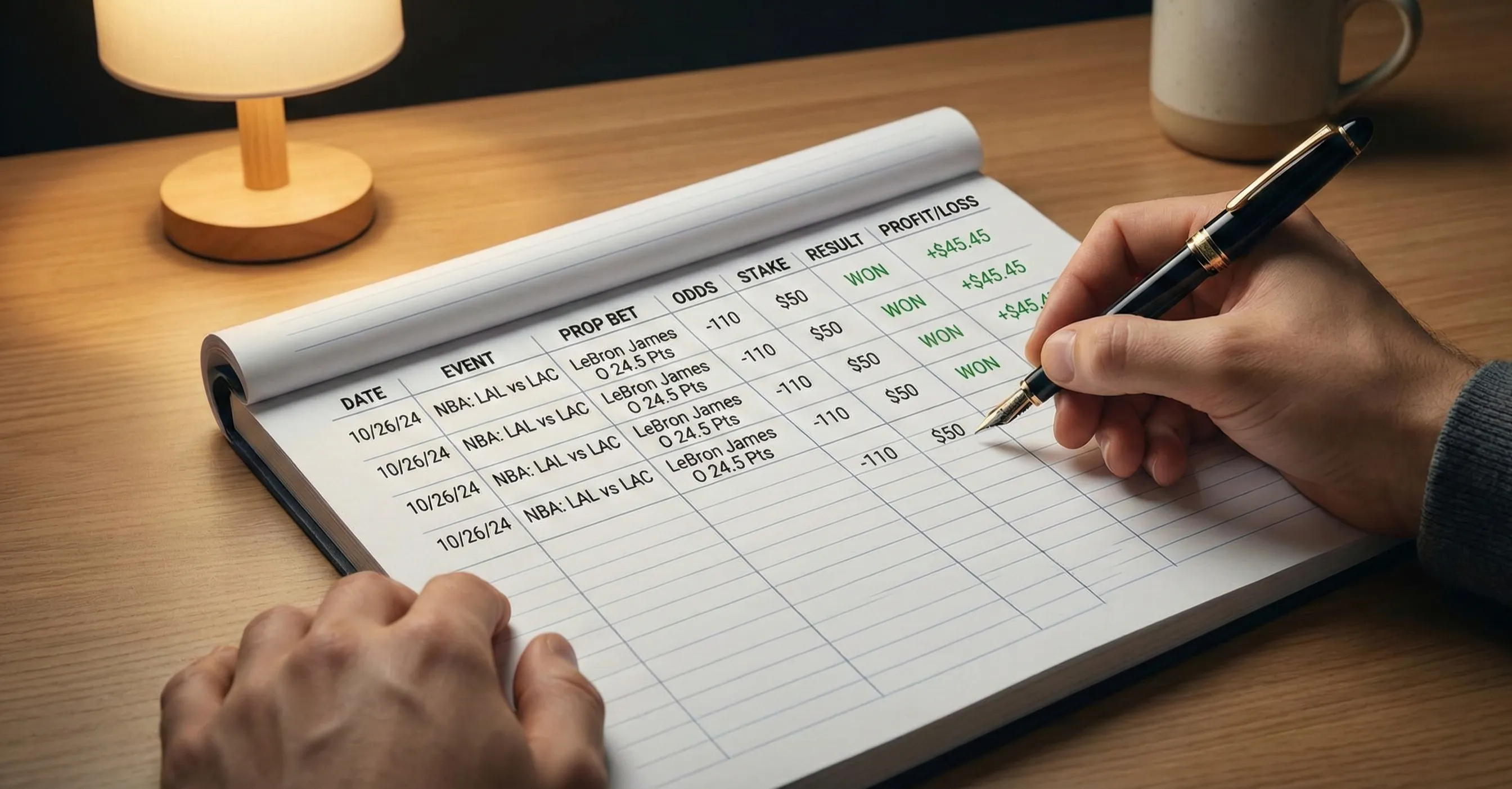
Finally, tracking results meticulously helps refine your approach. Recording not just wins and losses but your pre-bet probability assessments allows you to calibrate your skill over time. If you consistently estimate 55% probabilities on bets that win only 48% of the time, your edge estimation process needs adjustment.
The Role of Props in Your Overall Strategy
Prop bets work best as a complement to rather than replacement for fundamental game-line betting. The elevated juice on props means you’re paying more for every dollar wagered, so the edges needed to profit are correspondingly higher.
For recreational bettors, props enhance entertainment by creating multiple rooting interests throughout a game. You might care about every target a receiver sees, every strikeout a pitcher records, or every three-pointer a guard attempts. This engagement adds value even when expected returns are negative.
For serious bettors, props represent a potentially profitable niche requiring specialized knowledge and research depth. The narrower focus of player performance allows genuine expertise to generate edge, but the research investment must justify the returns. Finding and betting mispriced props requires significant time commitment that mainstream game-line betting might not demand.
Whether props fit your betting approach depends on your goals, skills, and available time. Understanding what you’re betting on, how prices are set, and where edges might exist makes you a smarter participant regardless of how prominently props feature in your overall betting portfolio.
See also futures betting.
