


Sports betting exists on a spectrum from harmless entertainment to destructive compulsion. Most bettors occupy the healthy middle ground, enjoying the excitement of wagering while maintaining control over their behavior and finances. But the line between recreational betting and problem gambling can blur gradually, often without the person involved recognizing the shift until significant damage has occurred.
This guide isn’t about eliminating risk from betting, which is impossible, or moralizing about gambling, which isn’t helpful. It’s about providing practical tools for maintaining a healthy relationship with sports betting. Whether you’re new to wagering or have been betting for years, periodically assessing your habits and knowing the warning signs helps ensure betting remains an enjoyable activity rather than a source of harm.
Responsible gambling on brom bet.
Establishing Healthy Betting Habits
Healthy sports betting starts with clear boundaries established before you place your first wager. These boundaries should cover how much you bet, how often you bet, and how betting fits into your broader life.
Set a dedicated betting bankroll that’s truly disposable income. This means money you could lose entirely without affecting your ability to pay bills, save for goals, or maintain your standard of living. If losing your entire bankroll would create financial stress, it’s too large.
Determine time limits for betting activities. Endless hours researching games, monitoring live odds, and sweating bets indicate that betting is consuming disproportionate mental energy. Establish boundaries for how much time you’ll spend on betting-related activities weekly.
Keep betting separate from other financial accounts. A dedicated betting bankroll that you don’t commingle with everyday money creates natural friction against overspending. When the bankroll is depleted, you’re done until you can responsibly replenish it.
See also bankroll management.
Never bet money intended for essential expenses. Rent, food, utilities, debt payments, and savings should be completely off-limits. The rationalization that you’ll win it back before bills are due has preceded countless financial disasters.
Recognizing Warning Signs
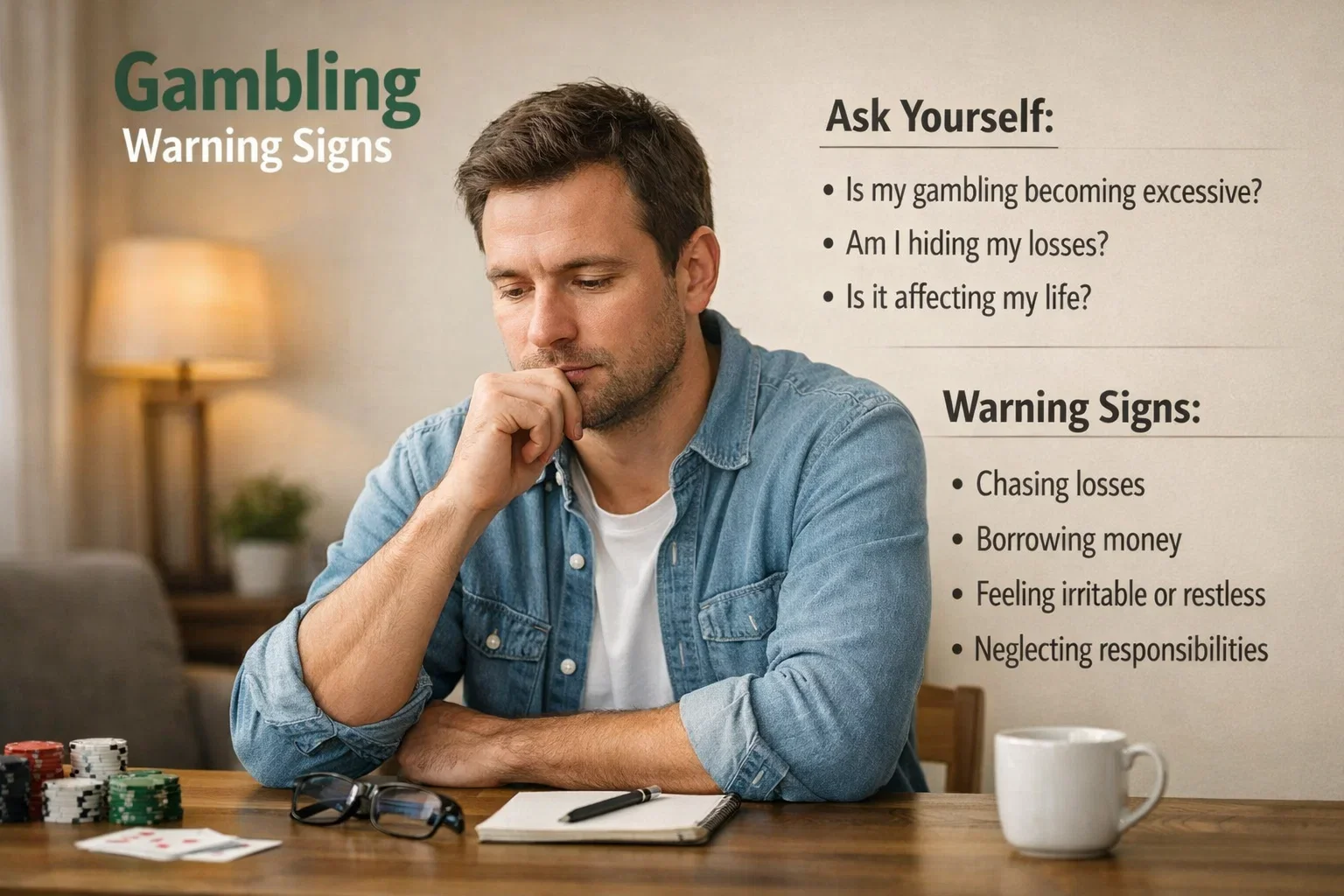
Problem gambling rarely announces itself dramatically. More often, it develops through gradual escalation that seems reasonable at each step. Recognizing warning signs early enables intervention before serious harm occurs.
Chasing losses represents the most common gateway to problem gambling. After a losing session, the urge to place additional bets to recover losses can feel overwhelming. This behavior almost always makes situations worse rather than better.
Betting more than intended, whether in amount or frequency, suggests weakening control. If you regularly exceed limits you’ve set for yourself, the limits aren’t functioning as intended.
Preoccupation with betting that interferes with work, relationships, or other responsibilities indicates problematic involvement. When you’re thinking about bets during important meetings or neglecting family obligations to monitor games, betting has become too central to your life.
Lying about betting to friends or family reveals awareness that your behavior has become problematic. If you feel the need to hide your betting activity, examine why that concealment feels necessary.
Borrowing money to bet or to cover betting losses crosses a critical line. Using credit cards, payday loans, or borrowed funds for gambling creates debt spirals that compound rapidly.
Experiencing mood swings based on betting outcomes suggests excessive emotional investment. While some emotional response to wins and losses is natural, extreme highs and lows indicate that betting carries too much psychological weight.
Using Self-Control Tools
Modern sportsbooks offer various tools designed to help bettors maintain control. Using these features proactively, rather than waiting until problems develop, demonstrates healthy engagement with gambling.
Deposit limits cap how much money you can add to your account within specified timeframes. Setting daily, weekly, or monthly deposit limits prevents impulsive deposits during emotional moments. Most books make increasing limits difficult or subject to waiting periods, providing cooling-off protection.
Loss limits automatically stop your betting once you’ve lost a predetermined amount. Unlike deposit limits that affect incoming funds, loss limits track actual losses and pause betting activity when thresholds are reached.
Time limits remind you when you’ve been actively betting for extended periods or restrict access after specified durations. These tools help prevent the immersive state where hours pass unnoticed while you’re absorbed in betting.
Reality checks provide periodic prompts showing your session duration and results. These interruptions break the flow state that can lead to excessive betting and force moments of reflection.
Self-exclusion allows you to ban yourself from a sportsbook for specified periods or permanently. During self-exclusion, you cannot access your account or place bets. This tool serves bettors who recognize they need a complete break from gambling.
Maintaining Perspective
Healthy betting requires realistic expectations about outcomes and appropriate emotional calibration. Distorted thinking patterns undermine both financial results and psychological wellbeing.
Accept that losing is normal and expected. Even skilled bettors lose roughly half their bets. Individual results over short periods tell you almost nothing about long-term outcomes. A losing week doesn’t mean you’re doing something wrong; a winning week doesn’t mean you’ve figured out the secret.
Avoid outcome-based emotional responses. Winning doesn’t make you smart, and losing doesn’t make you stupid. Results involve substantial randomness that you cannot control. Judge your decisions by their quality, not their outcomes.
Remember that sports betting is entertainment, not income. Treating betting as a job or financial necessity creates pressure that distorts decision-making and emotional responses. If you need betting to produce income, you’re in a dangerous position.
Don’t let betting define your identity. Being a sports bettor is something you do, not who you are. Maintaining diverse interests, relationships, and sources of satisfaction prevents betting from becoming disproportionately important.
Seeking Help When Needed

Recognizing when betting has become problematic and seeking help demonstrates strength, not weakness. Professional resources exist specifically to help people regain control over gambling behavior.
The National Problem Gambling Helpline at 1-800-522-4700 provides free, confidential support 24 hours a day. Trained counselors can discuss your situation, provide resources, and connect you with local treatment options.
Gamblers Anonymous offers peer support through meetings where people with gambling problems share experiences and support each other’s recovery. Meetings are free and available in most communities and online.
Professional counseling with therapists specializing in gambling addiction provides structured treatment for problem gambling. Cognitive behavioral therapy has proven particularly effective for addressing the thought patterns that drive compulsive gambling.
Many states offer problem gambling programs funded by gambling tax revenue. These programs may provide free or reduced-cost treatment, financial counseling, and other support services.
Financial counseling can help address the practical consequences of problem gambling. Debt management, creditor negotiation, and financial rebuilding require expertise that general gambling counselors may not possess.
Supporting Others
If someone you care about appears to have a gambling problem, approaching the situation thoughtfully increases the chance of a positive outcome.
Express concern without judgment. Accusatory or critical approaches typically trigger defensiveness rather than openness. Focus on specific behaviors you’ve observed and their impacts rather than labeling the person.
Avoid enabling gambling behavior. Lending money, covering debts, or making excuses for gambling-related problems removes consequences that might otherwise motivate change. Supporting someone doesn’t mean protecting them from the results of their choices.
Educate yourself about problem gambling. Understanding the nature of gambling addiction helps you respond more effectively and maintain realistic expectations about recovery timelines.
Take care of yourself. Living with someone who has a gambling problem creates stress and potential financial consequences for you. Seeking support for yourself through groups like Gam-Anon helps you cope regardless of whether your loved one seeks help.
Betting Should Enhance, Not Diminish
Sports betting at its best adds excitement to watching games you’d enjoy anyway, provides intellectual challenge through handicapping, and offers social connection through shared interest with friends. At its worst, it destroys finances, relationships, and mental health.
The difference between these outcomes lies in maintaining appropriate boundaries and recognizing when those boundaries are being tested. Regular self-assessment, honest acknowledgment of warning signs, and willingness to use available tools all contribute to keeping betting in its proper place.
No one sets out to develop a gambling problem. It happens gradually to people who believed it couldn’t happen to them. Taking responsibility for your gambling health means acknowledging that you’re not immune and actively managing your relationship with betting rather than assuming everything will be fine.
If anything in this guide resonates with your current situation, consider it a prompt for honest reflection. And if you recognize that betting has become problematic, remember that help is available and recovery is possible. The first step is acknowledging the problem; everything after that becomes more manageable with proper support.
